Mastering Heads Up Poker Strategy in 2026: GTO, Psychology, and the Art of Adjustments


Picture the scene. Just two players, one table, nothing else in the way. No safety net of tight folds in early position, no third party to disguise your range, no “image” stretched across nine seats. It’s you and the person across from you. Sometimes a live stare, sometimes just a digital avatar, and every single decision hits harder. That’s heads up poker. Stripped down, nothing hidden.
It’s not just another game format; it’s the crucible. In a full-ring game, you can wait. Fold a hundred hands, pick up aces, and still win. Heads up? Forget it. The blinds chew at you twice as fast. Suddenly, 9♣5♦ is a raise, Q♠3♥ is a defend, and hands that look like garbage in a cash game suddenly matter. If poker were a language, HU would be the raw poetry form: sharp, minimal, relentless.
Why should you care? Because no matter what kind of player you are, someone aiming for a WSOP bracelet, an online grinder firing off HU sit & gos, or a tournament player facing the inevitable final duel, you will run into this format. The skills sharpened here, balancing ranges, adapting to a single opponent, and keeping emotions in check, bleed into every other game you’ll ever play.
This guide breaks down everything you need to survive (and thrive) heads up in 2026. Pre-flop charts, post-flop maneuvering, solvers, psychology, and yes, even lessons stolen from the AIs that broke this game open. By the end, you won’t just “understand” HU, you’ll know how to think, pivot, and win when there’s literally nowhere left to hide.
What Heads Up Poker Really Is
The definition is simple: two players face off under the standard no-limit hold’em rules. The feel, however, is completely different.
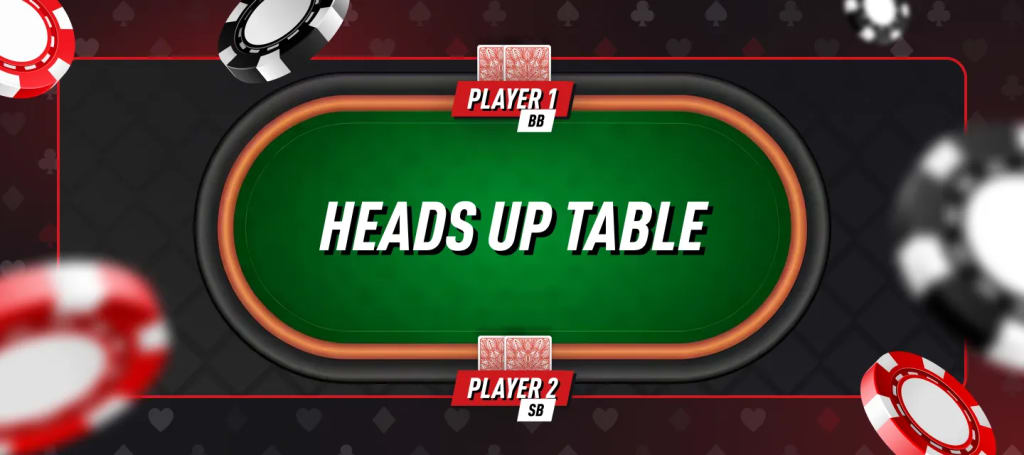
The blinds rotate every hand: button posts small, big blind sits opposite. That constant rotation changes everything. No waiting around for the nuts. If you don’t fight for pots, the blinds will bleed you dry.
And then there’s position. In a nine-handed game, position matters. In heads up poker, it’s the whole ballgame. Whoever has the button acts last post-flop, and the informational advantage is so big that pros raise nearly every hand on the button. We’re talking 80%, sometimes 90% of hands. Try that at a full-ring table, and people think you’re insane. Here? It’s correct.
Hand values warp too. Ace-eight offsuit, usually trash in a ring game, becomes strong. King-high sometimes drags in entire pots. That’s the fun of it: you’re constantly reassessing.
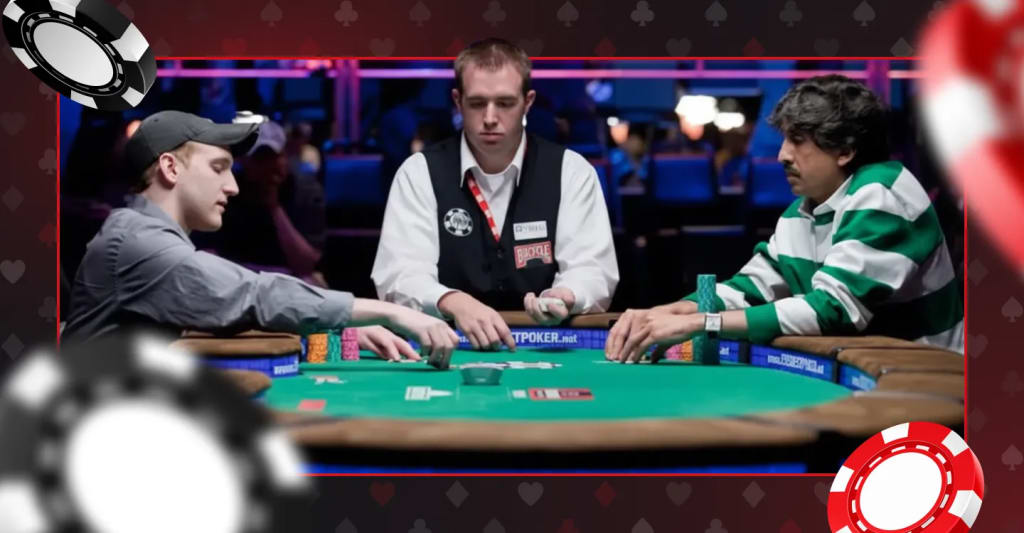
For proof of heads up poker’s drama, you don’t need to look further than the WSOP. The Heads Up Championship is where legends have left fingerprints: Phil Ivey, Chris Ferguson, Adrian Mateos. And every year, the Main Event crowns a champion one-on-one. Often, it’s not who catches the best cards, it’s who adapts fastest when the lights get hottest.
The Unique Dynamics of HU Play
So what makes it such a different beast? Three words: aggression, marginal hands, position.
Aggression runs the show. Blinds rotate every hand, meaning folding too much is a slow death. Even casual players sense it, the game feels faster than full-ring. That’s not a vibe, that’s arithmetic.
Marginal hands matter. The J♣7♠ you’d never touch under the gun? Now it’s playable. But here’s the trap: some players overvalue complete trash, thinking “any two” is good, while others undervalue hands that actually crush against wide ranges. Walking that line is everything,
Position is a weapon. The button’s power is absurd. Data from sites like Upswing Poker show good players opening 70–80% from the button, and the best creeping up near 90%, especially with small raises like 2x. Try that in a live $1/$2 game, and you’ll get mocked. Do it heads up, and you’ll win.
There is hardly any room for mistakes in a 1-on-1 battle, and this is what heads up strategy is about. We’ve carefully reviewed poker sites for you to present the most worthy sites where you can hone your skills: GGPoker , WPT Global , and Coinpoker . If you sign up with the bonus code SMPBONUS, you can have all the extras, welcome bonuses, additional perks, and more.


Pre-Flop: Your Opening Battle Plan
Think of pre-flop as your military positioning. Screw this up, and you’ll be scrambling the rest of the hand.
When you’ve got the button, the rule of thumb is simple: raise almost everything. I don’t mean literally every card, though I’ve definitely tilted someone by doing it for five hands in a row, but something like three out of four hands minimum. And don’t bomb it huge. Small opens (2x, maybe 2.5x) keep the pot manageable while putting your opponent in the blender over and over.
From the big blind, you can’t just sit back. Fold too often, and you’re donating. Mix in 3-bets with your monsters, sure, but also sneak in hands that look “cute” like suited connectors. And sometimes just flat-call with cards that play nicely post-flop. It feels weird the first few times, calling with Q8s instead of folding, but that’s the adjustment HU forces.
Short-stacked play is its own math puzzle. This is where those infamous push/fold charts come in handy. With 10 big blinds, for example, it’s correct to jam hands like K8 offsuit or Q9 suited. It sounds loose until you realize the alternative is bleeding out. Fun fact: I once shoved every single hand for about twenty minutes in a home game just to test the theory – my friend still hasn’t forgiven me.
Make sure you test your skills on smaller stakes first, before diving deep into higher stakes of heads up online games. If you are facing an opponent at a $100/$200 table, knowing the heads up poker rules by heart won’t be enough. You need a well utilized heads up strategy. You can always find suitable heads up poker games on Natural8, for example, no matter the size of your bankroll.

Post-Flop: The Tug of War
Once the flop hits, the real knife fight begins. Heads up poker post-flop game is about betting, counter-betting, and avoiding predictability.
On dry boards like K♠7♦2♣, c-betting is basically expected. But solvers have shown it’s a trap to always fire. A savvy opponent will start check-raising light, and suddenly you’re stuck. Mix in checks even with hands that look bet-worthy.
On coordinated boards, think J♥T♥9♠, the game slows down. Pot control becomes more important than flexing aggression.
Check-raises are the great equalizer here. Against someone who c-bets every board, fire back. Even turning middle pair into a bluff-raise can send a message: “Hey, I’m not folding every time you flick chips.”
The big rule: don’t become a robot. Sometimes bluff where you’d usually value bet. Sometimes trap with monsters. Remember, you’re battling the same person hand after hand, and patterns get spotted fast.
I once tried to get fancy with a random check-raise holding complete air in a heads up poker game. My opponent instantly shoved, leaving me staring at my own bad idea. Lesson: pick your spots.
GTO vs. Exploitative Adjustments
Here’s the eternal balancing act: math versus people.
GTO (Game Theory Optimal) is the “perfect” strategy, at least in theory. Solvers like PioSolver spit out exact frequencies for betting, checking, and raising. It’s gorgeous on paper. I used it so much once that I actually dreamed about a 33% pot-size bet. Disturbing, but true.
But here’s the reality: most players don’t play like machines. They over-c-bet, or they fold way too much to 3-bets, or they call down with total nonsense. If you stick to pure GTO, you’ll miss a goldmine of mistakes to punish.
That’s where exploitation comes in, when it comes to heads up poker. If someone’s giving up their big blind 80% of the time, don’t just open wide. Open everything. If they’re calling every flop bet, cut your bluffs down and hammer them with value.
It’s like boxing. You keep your guard up (the GTO base), but when you see their chin exposed, you throw the hook (the exploit). That’s how heads up poker makes money.
What AI Taught Us
The last decade showed us how terrifying machines can be at this game.
- Cepheus (2015): Solved HU limit hold’em. Literally unbeatable.
- DeepStack (2016): A blend of neural nets and advanced algorithms playing no-limit like a stone-cold killer.
- Libratus (2017): The famous one. Beat four elite pros in a 20-day challenge, scooping $1.7 million in chips.
What do we take from that? Not that humans can’t win, but that balance and consistency matter more than ever. Relentless pressure, fearless decision-making. Those are the human lessons.
The Psychological Edge
Math aside, heads up poker is raw psychology.
Live, you’re watching body language, timing, bet sizing quirks. Online, it’s subtle: do they snap-call weak hands? Do they tank only with monsters? Those patterns tell you more than you think.

Tilt is magnified, too. Lose one big pot, and you’re one bad call away from spiraling. The pros? They train themselves to detach. Annie Duke called poker “decision-making under uncertainty.” Maria Konnikova framed it as risk management in The Biggest Bluff. Both hit the same truth: you don’t control the cards, you control how you react.
How to Actually Get Better at HU
All the theory in the world means nothing if you don’t grind it out. It works the same in heads up poker as well. Here’s what really helps:
- Dive into solver study. Yes, it’s painful, yes, you’ll hate staring at rainbow flops for hours, but the patterns stick. (Pro tip: don’t try to run sims right before bed – you’ll wake up at 3 a.m. wondering why you dreamed of 9♠6♦2♣.)
- Drill push/fold ranges. After a week of practice, you’ll know exactly which hands are jams at 10BB without thinking.
- Review your hands. Tag weird spots. Go back later when you’re calm and see what you missed.
- Play lower stakes first. You’ll get the reps without the financial sting.
- Most important: volume. There’s no substitute. The more spots you see, the faster your instincts sharpen.
HU in Tournaments vs. Cash
Heads up poker feels different depending on the arena. Cash games? Deeper stacks, more room to experiment, hours to grind edges. Tournaments? By the time you get to HU, stacks are shallow, and push/fold often rules. And the pressure is insane, every chip is worth real money jumps.
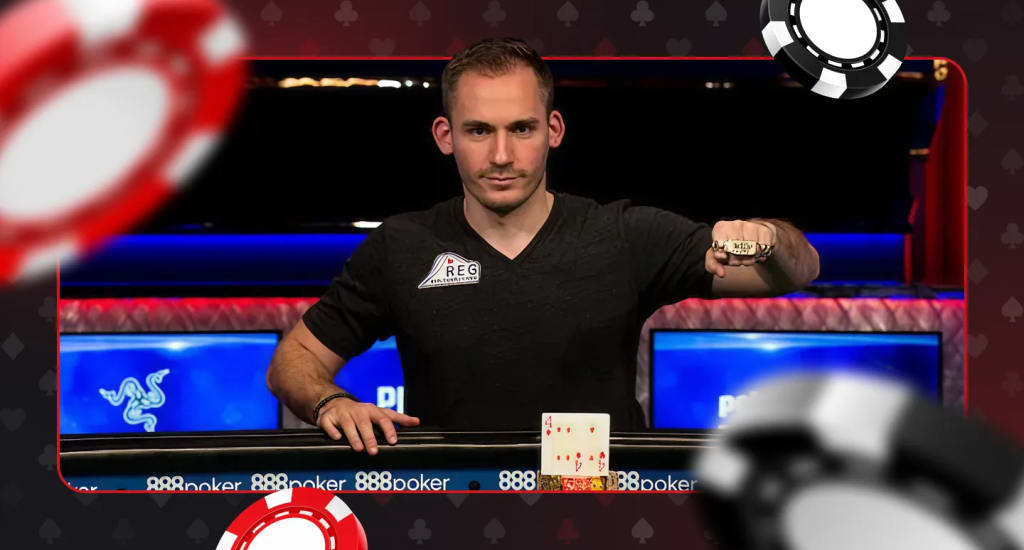
Look at the WSOP Main Event every year. That final duel is the ultimate reminder: HU isn’t just cards, it’s pressure, adaptability, and courage wrapped together.
Closing Thoughts: Why HU Is the Pinnacle
Heads up is poker boiled to its essence. No excuses. Charts and solver printouts won’t save you if you can’t adjust. Emotional swings will wreck you if you can’t control them.
But start with GTO foundations, sprinkle in the right exploitative adjustments, borrow a little ruthlessness from AI, and keep your head steady, you’ll not only survive HU, but you’ll also thrive.
Next time you’re one-on-one, whether online or under the lights, remember: it’s not really cards versus cards. It’s willpower versus willpower. That’s what makes heads up poker the truest test in the game.
Related Poker Game Types





Related Online Poker Rooms